
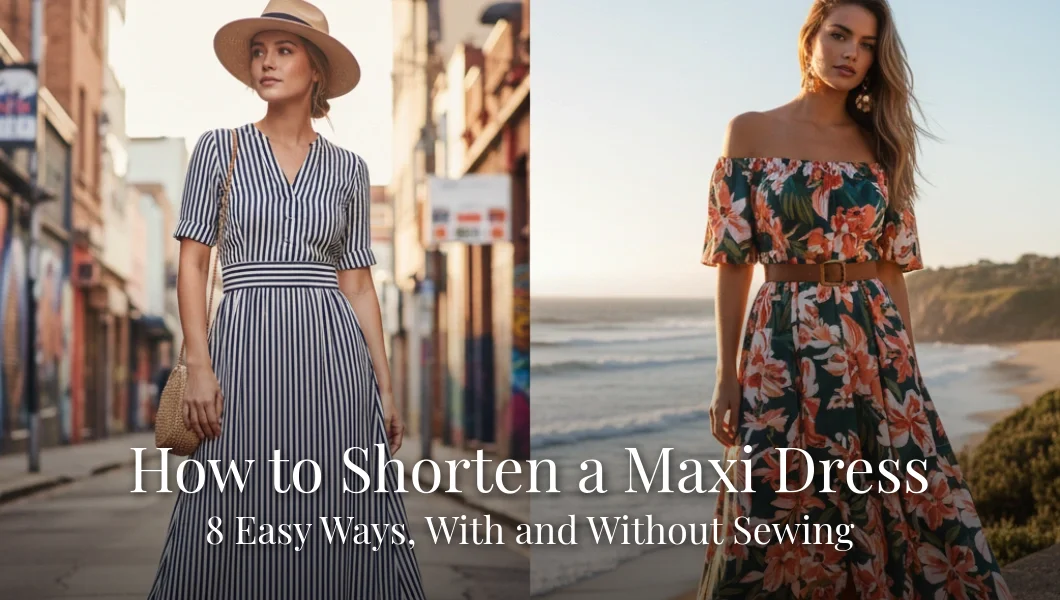

Hello, lovely! I’m your maxi dress, and if I’m dragging along the floor, catching under your heels or collecting dust at the hem, it’s time we fixed that. Learning how to shorten a maxi dress is one of the most useful wardrobe skills you can have, because so many off-the-rack maxis are simply too long for petite and average-height frames.
This guide covers eight ways to shorten me: quick no-sew fixes for tonight, semi-permanent options for the season ahead and permanent hems that last for years. You’ll also find a table to help you choose the right method, step-by-step instructions, and advice for tricky fabrics like chiffon, satin and tiered skirts.
Step One: Work Out How Much to Take Up
Before you shorten anything, find your ideal length. Put on the dress and the shoes you’ll wear with it, then stand in front of a full-length mirror.
- Stand straight with your weight evenly on both feet.
- Ask a friend to pin or chalk-mark the hem where you want it to finish. If you’re on your own, fold the hem up and secure it with a few safety pins.
- For flats, aim for the hem to graze the top of your foot or sit 1 to 2 cm off the floor. For heels, it can sit a little lower.
- Walk, sit down and climb a step. If you can do all three without treading on the hem, you’ve found your length.
- Measure from the mark to the current hem in several places around the dress. This is the amount to take up.
Not sure which shoes to wear? Our guide to what shoes to wear with a maxi dress explains how footwear changes the ideal hem length.
How to Shorten a Maxi Dress: Which Method Should You Use?
Use this table to choose the best way to shorten your dress based on how long you need the fix to last and what your dress is made of.
Method | Sewing Needed? | How Long It Lasts | Best For | Difficulty |
Side or front knot | No | One wear | Jersey, cotton, casual dresses | Very easy |
Hair tie trick | No | One wear | Casual, beach and holiday dresses | Very easy |
Belt and blouse | No | One wear | Loose dresses without a fitted waist | Very easy |
Safety pins | No | One to a few wears | Any fabric, emergencies | Easy |
Iron-on hem tape | No | Several washes | Cotton, linen, polyester | Easy |
Fabric glue | No | Permanent | Heavier, non-sheer fabrics | Easy |
Cut and leave raw | No | Permanent | Jersey and knits that don’t fray | Easy |
Hand or machine hem | Yes | Permanent | Any dress you wear often | Moderate |
Tailor | Not by you | Permanent | Silk, chiffon, lined, beaded or tiered dresses | None |
No-Sew Method 1: The Side Knot
The knot is the fastest way to shorten a maxi dress without sewing, and it adds a relaxed, beachy shape to the hem.
- Gather a section of fabric at the side or front of the hem.
- Pull it up to the height you want.
- Tie the fabric in a loose knot and tuck the ends under so they don’t flap.
- Adjust the drape so the hem dips gently on either side.
Best for: jersey, cotton and viscose. Avoid knotting silk or satin, which can crease and mark, and stiff fabrics, which won’t knot neatly.
No-Sew Method 2: The Hair Tie Trick
Don’t want a bulky knot? A hair elastic does the same job more neatly.
- Gather a handful of fabric from the side of the hem.
- Twist it and push it through a hair tie.
- Wrap the tie around the twist two or three times.
- Tuck the tied section under the hem so the elastic is hidden.
Best for: casual, beach and holiday dresses. Use a hair tie that matches your dress colour so it disappears.
No-Sew Method 3: Belt and Blouse
This method shortens the dress from the waist rather than the hem, so the hemline itself stays neat.
- Put on the dress and fasten a belt at your natural waist.
- Pull the dress up through the belt, a little at a time, until the hem is where you want it.
- Let the extra fabric fall softly over the belt. This is called blousing.
- Check the back in a mirror and even out the fabric all the way around.
Best for: loose, shift and shirt-style maxis. It also creates a waist on shapeless dresses, which is handy for apple and rectangle body shapes.
No-Sew Method 4: Safety Pins
Safety pins are the ideal emergency fix and work on almost any fabric.
- Turn the dress inside out.
- Fold the hem up to your marked length.
- Pin vertically every 8 to 10 cm, with the pin heads pointing up so they don’t scratch your legs.
- Turn the dress the right way out and check that no pins show.
Tip: use small, fine pins on delicate fabrics to avoid leaving holes.

No-Sew Method 5: Iron-On Hem Tape
Iron-on hem tape, also called fusible web or hemming tape, is a thin strip of adhesive that melts when heated and bonds two layers of fabric together. You’ll find it at sewing and craft stores.
- Wash and dry the dress first so it doesn’t shrink after you hem it.
- Turn the dress inside out, fold the hem up to your marked length and press the fold with an iron.
- Trim the excess fabric so the fold is about 3 to 4 cm deep.
- Slide the hem tape between the dress and the folded fabric, just below the raw edge.
- Lay a damp pressing cloth on top and press firmly, section by section, following the tape’s instructions. Lift and press rather than sliding the iron.
- Let it cool completely before you wear the dress.
Best for: cotton, linen and polyester. Avoid on: sheer chiffon, where the tape may show through, silk and satin, which high heat can damage, and stretchy knits, because the tape stops the fabric stretching.
No-Sew Method 6: Fabric Glue
Fabric glue gives you a permanent hem without any stitching.
- Fold and press the hem to your marked length.
- Test the glue on a hidden seam first to make sure it doesn’t soak through or stain.
- Apply a thin, even line of glue just under the raw edge.
- Press the layers together and weigh them down with books while the glue dries.
- Leave it for the full curing time on the bottle before washing.
Best for: heavier, non-sheer fabrics. Check the label to make sure the glue is washable and flexible once dry.
No-Sew Method 7: Cut It (Knit Fabrics Only)
Jersey and many other knit fabrics don’t fray, so you can cut them to length and leave a raw edge. It’s a popular trick for T-shirt maxis.
- Mark your new length with chalk. You don’t need to add a hem allowance.
- Lay the dress flat and smooth out both layers.
- Cut in one long, smooth line with sharp fabric scissors.
- Gently stretch the cut edge and it will curl slightly for a soft finish.
Important: only do this with knit fabric. Woven fabrics like cotton, linen and chiffon will fray if they’re left raw.
Method 8: Hem It by Hand or Machine
If it’s a dress you’ll wear often, a proper hem is worth the effort. This is how to shorten a maxi dress permanently.
What You'll Need
- Sharp fabric scissors and pins
- A tape measure and tailor’s chalk
- A needle and thread, or a sewing machine, in a matching colour
- An iron and ironing board
Step-by-Step Instructions
- Mark the new hemline with chalk while wearing the dress and your shoes.
- Add a hem allowance. For a standard double-fold hem, add 2 to 3 cm below your mark. For lightweight fabrics, a narrow rolled hem needs only about 1 cm.
- Cut along the allowance line, keeping the line smooth and even.
- Fold and press. Fold the raw edge up 1 cm and press it, then fold again along your hemline and press.
- Pin the folded hem every 5 to 8 cm.
- Stitch. By hand, use a slip stitch or blind hem stitch so the thread is almost invisible from the outside. By machine, sew close to the inner fold.
- Press the finished hem for a crisp edge.
How to Hem a Maxi Dress by Hand for Beginners
A slip stitch is the easiest invisible hand stitch. Bring the needle up through the fold, pick up just one or two threads of the main fabric, then slide the needle back inside the fold for about 1 cm. Repeat all the way around the hem. Keep the thread slightly loose so the hem doesn’t pucker.
Tricky Fabrics and Styles
Some maxi dresses need extra care. Here’s how to approach the most common problem styles.
Dress Type | Best Approach |
Chiffon or georgette | Use a narrow rolled hem. Avoid hem tape, which shows through sheer fabric. |
Silk or satin | See a tailor, or hand-stitch a rolled hem. These fabrics mark easily and slip while you sew. |
Bias-cut slip dresses | Hang the dress for 24 hours before marking, because bias-cut fabric drops and stretches. |
Tiered dresses | Shorten at the top tier seam, or remove a tier, so you keep the bottom ruffle intact. |
Dresses with a split | Measure the split first. Taking up the hem will make the split shorter. |
Lined dresses | Shorten the lining too, so it finishes 2 to 3 cm above the outer fabric. |
Beaded or embellished hems | Shorten from the waist or bodice instead, or see a professional. |
Wearing a sheer style? See How to Wear a Sheer Maxi Dress with Confidence. For tiered dresses, read our Tiered Maxi Dress Styling Tips.
When to See a Tailor
A professional alteration is worth it if your dress is expensive, made from silk or chiffon, lined, beaded or layered, or if it needs to be perfect for an event like a wedding. Alteration prices vary between tailors and depend on the fabric and construction, so ask for a quote before you commit and allow at least a week before your event.
Is Your Maxi Dress Too Long? A Guide by Height
Most maxi dresses are designed around a particular height range. This rough guide shows what to expect, although it varies between brands and styles.
Your Height | What to Expect | Best Fix |
Under 155 cm | Often 10 cm or more too long | Shop petite ranges, or hem permanently |
155 to 162 cm | Often 5 to 10 cm too long | Hem the dress, or wear it with platforms |
163 to 170 cm | Usually close to the intended length | A small hem or the right shoes |
Over 170 cm | May be too short in flats | Shop tall ranges, or wear flats |
For more fit advice, see Long Maxi Dress Styling Tips for Petite and Tall Women and our Plus Size Maxi Dress Guide.
Common Mistakes When You Shorten a Maxi Dress
- Measuring without shoes. The right length depends on your footwear, so always mark the hem with your shoes on.
- Cutting before testing. Pin the new length and wear it around the house first. You can’t add fabric back once it’s cut.
- Using hem tape on sheer fabric. It shows through chiffon and organza.
- Forgetting the lining. A lining that hangs below the outer hem looks messy.
- Cutting woven fabric without hemming. Cotton, linen and chiffon will fray if the edge is left raw.
FAQs
How can I shorten a maxi dress without cutting it?
Use a side knot, a hair tie, a belt to blouse the fabric at your waist, or safety pins. Iron-on hem tape can also shorten a dress without cutting, although trimming the excess gives a neater finish.
How do you shorten a maxi dress without sewing?
The easiest no-sew options are iron-on hem tape and fabric glue for longer-lasting results, or knots, hair ties, belts and safety pins for a quick temporary fix.
How long should a maxi dress be?
With the shoes you plan to wear, the hem should graze the top of your foot or sit about 1 to 2 cm off the floor. You should be able to walk, sit and climb stairs without stepping on it.
Can I shorten a maxi dress with a hair tie?
Yes. Gather fabric from the side of the hem, twist it, wrap it in a hair tie and tuck the tied section under. It’s a quick fix for casual and beach dresses.
Does iron-on hem tape last through washing?
Good-quality hem tape usually survives several gentle washes, but it can loosen over time, especially in hot washes or the dryer. Wash the dress inside out on a gentle cycle and re-press the hem if it starts to lift.
How do I shorten a tiered maxi dress?
Shorten it at the seam of the top tier, or remove one tier entirely. This keeps the ruffled bottom edge intact and preserves the dress’s proportions.
Can I cut a maxi dress shorter and leave it unhemmed?
Only if it’s made from a knit fabric like jersey, which doesn’t fray. Woven fabrics such as cotton, linen and chiffon will unravel if the edge is left raw.
How much does it cost to hem a maxi dress?
Prices vary by tailor, fabric and construction. A simple single-layer hem costs much less than a lined, tiered, beaded or silk dress, so ask a local alterations shop for a quote.
Final Thoughts on Getting the Perfect Length
Now you know how to shorten a maxi dress for any situation: a knot or hair tie for tonight, hem tape or glue for a quick semi-permanent fix, and a hand-sewn or tailored hem for the dresses you love most. Always measure with your shoes on, test your chosen method on a hidden area first, and take extra care with sheer, slippery and tiered fabrics.
When I’m the right length, I swish instead of drag, and you can walk, dance and climb stairs with confidence.
Ready for a dress that fits from the start?
Look for petite or tall ranges when you shop, and use our Special Discount on your next maxi. For more ideas, explore our Style Guides and Seasonal Picks.

